Flushing the roots of your cannabis plants

Root flushing is a simple technique that many growers use to improve the quality of their marijuana crops, especially in terms of the flavour and aroma of the buds. In this post we explain everything you need to know about this method; how it’s done; and what benefits it can provide.

Why do you need to flush the roots?
Every time you water your cannabis plants with fertiliser, part of it is absorbed through the roots and some of it remains in the substrate. What root flushing does is eliminate the excess build-up of salts and nutrients in the soil. This can be done occasionally when halfway through the growing cycle, or more frequently towards the end, just before the plants are cut (which is always highly recommended). Let’s analyse both of these two options:
- Halfway through the growing cycle: you’ll need to do this if at some point your plants get blocked by over-fertilisation. An excess of salts in the soil can stop the roots from correctly absorbing the nutrients, which results in a deceleration of the plant’s development and the appearance of signs of nutritional deficiencies on the leaves. This is particularly serious in some types of grows, for instance in coco coir, as plant deterioration occurs more rapidly than in soil; so you’ll need to act fast. Some growers also choose to do ‘preventive’ root flushing before the flowering starts, especially when using mineral fertilisers (unlike organic fertilisers, these tend to cause an excess of salts in the soil).
- Before harvest time: this is done more frequently. It helps force the plants to consume all their remaining food reserves and it also cleans up any type of residue that may remain in the soil area. When the roots can’t find any more nutrients in the substrate, the plants begin to consume the ones left in the leaves, which is the reason why the leaves start to turn yellow as they lose their chlorophyll. This leads to higher-quality flowers with a cleaner taste.
How do you flush the roots of your cannabis plants?
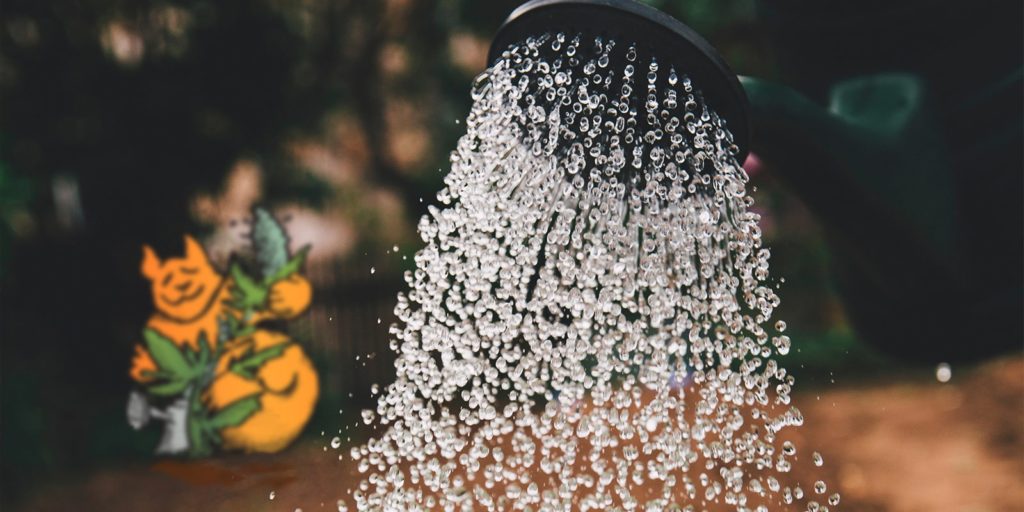
Root flushing is in fact a simple process. It consists of watering your plants with abundant clean water until it starts overflowing under the pot. Some growers do this in the bath as it’s a practical way of disposing of the excess water. There is a series of factors that you must take into account to correctly perform this process:
- Water temperature: with root flushing you don’t actually need to control as many variables as when you water your plants with fertilisers. However, one of the parameters that you need to pay attention to is the water temperature. This should ideally be between 20º and 22ºC. If the water is cooler than this, it could cause the plants to become stressed; if it’s warmer, it could lead to root rotting.
- PH: Just as you do when you’re watering normally, monitor the pH of the water used for the flushing of the roots to make sure it stays between 6.5 and 7.
Once temperature and pH have been correctly set, you only need to flood the substrate and wait for the water to drain under the pot. At first, you’ll notice that the drained water comes out dirty. Repeat the process until the water finally comes out clean. As mentioned before, the idea here is to remove any excess nutrients which are present in the soil.
While it’s true that root flushing can be done with only water, there are also some products on the market which are specifically designed to facilitate this process. If you’re faced with a serious case of over-fertilisation, you can always resort to this type of products.
How to flush the roots in outdoor grows?
The root flushing process may seem a bit more complex outdoors as plants tend to be in really big pots or planted directly in the soil. In any case, the method doesn’t change much. The only thing you need to add to the equation is patience, as a larger amount of substrate translates into more time needed to flush each plant.
If your outdoor marijuana plants are in really big pots or planted directly in the soil, you only need to water little by little, for approximately 15 minutes, so the soil can absorb the water efficiently. It is best to use a water hose, preferably one that lets you easily adjust the amount of water coming out of it.
How to flush the roots in indoor grows?
For indoor grows, the root flushing process is often done in the bath because cannabis plants tend to be in smaller pots and are therefore easier to move. The approximate amount of water that you need to provide each plant to do a proper flushing of its roots is three times the volume of its pot. If your cannabis plants are, for instance, in 5 litre pots, you must irrigate each plant with 15 litres of clear water.
However, this is only an approximation, because the most important thing is to check that the drained water comes out clean (that’s the indication that the flushing has been successful). To measure this more accurately, you can use a TDS meter, which analyses the amount of minerals, salts, and metals that are dissolved in the water. With this device you can find out how many salts are present in the drained water when you start the flushing (this figure will probably be high, above 1000 ppm), and keep measuring the water until it reaches approximately 50 ppm.
Don’t rush when you’re flushing your plants. It’s best to do this slowly and gradually so the substrate can absorb the water effectively. Many growers use the shower head in ‘rain mode’ so the water is applied in a softer and more gradual way. Nonetheless, you should always check in advance that the pH of your tap water is between 6.5 and 7, and the temperature between 20 and 22 degrees.
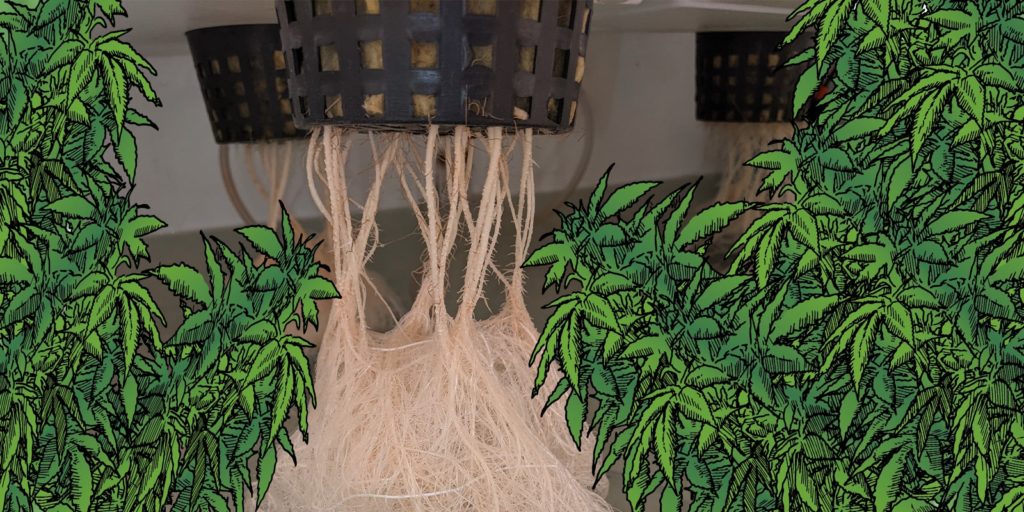
How to flush the roots in hydroponic systems?
Flushing the roots of a hydroponic or even aeroponic crop is even easier. You only need to follow these simple steps:
- To begin, empty the nutrient solution tank completely, and clean it even if it’s only with water, so that there are no traces of fertiliser at the bottom.
- Refill the water tank with the right ph.
- Turn on the irrigation system again normally.
This way, the plants will only receive water in the last period of the cycle and will not have access to any nutrients, so the root flushing will have the same effect as with the aforementioned methods.

When’s the best time to flush the roots before harvest?
If you’ve used mineral fertilisers in your cannabis grow, the best thing to do is to flush the roots around 15 days before cutting the plants. This will give them enough time to get rid of the remains of the fertiliser that’s still in their system, which will in turn improve the flavour of the flowers. You must keep in mind that, after root flushing, the substrate will remain waterlogged for a longer time than with normal irrigation, so you must ensure that it dries properly before harvesting to make sure that the plant drying process is performed correctly.