Does CBD show up on a drug test?
Can CBD show up on a drug test?
The last few years have been very successful for CBD. Due to the way this cannabinoid interacts with the body, an increasing number of users have been using it to treat different types of ailments, for example to relieve anxiety, chronic pain, insomnia or as an anti-inflammatory.
The public is becoming more and more aware of the benefits that CBD offers; but also many people are hesitant to use CBD products fear of failing a drug test.
CBD products are mostly made with cannabidiol that is extracted from the hemp plant, which also contains dozens of other compounds. So it is a valid concern considering that even hemp-derived CBD products are legally allowed to contain trace amounts of THC of 0.3%, which is the limit for this plant not to be subject to control under drug legislation.
CBD vs THC
To understand the influence that both cannabinoids, and their metabolites, have on a drug test one must first understand how they work. Researchers have identified more than 400 chemical compounds in the cannabis plant, of which about a hundred are biologically active. Among them, the most abundant are THC and CBD.
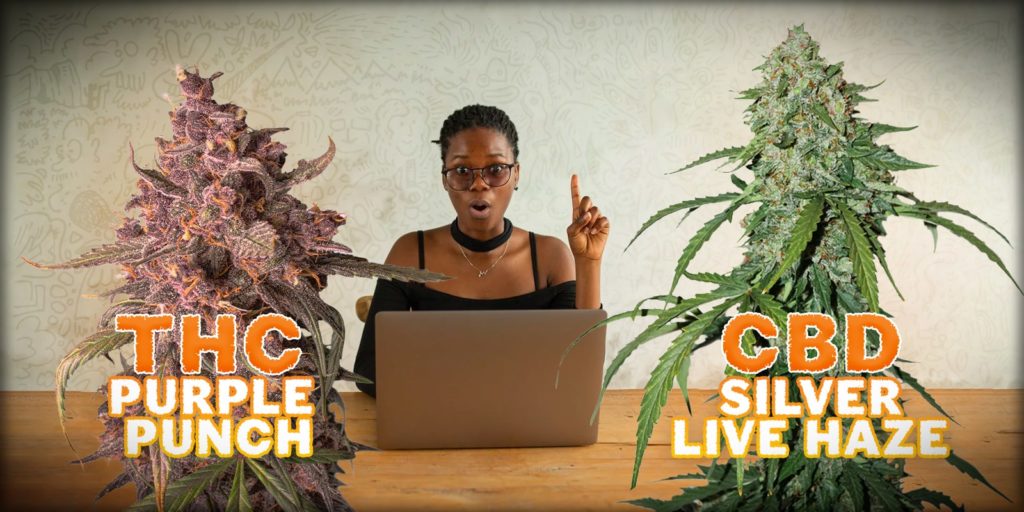
THC is the main psychoactive compound, but CBD does not have the same properties that affect consciousness or mental activity. Both bind to receptors in different parts of the body, mimicking endocannabinoids, which are natural compounds produced by the human body.
But CBD does not appear to bind to the same receptors as THC, so scientists are not yet sure how CBD exerts its effects, although they believe it may increase endocannabinoid levels or bind to receptors for serotonin, a hormone that regulates mood, happiness and anxiety.
Can CBD provoke a false positive for THC in drug tests?
It is important to note that CBD does not create a false positive for THC in drug tests. This is because drug tests check for the metabolites that your body makes out of THC. The human body does not make these same metabolites from consumption of CBD alone and so they will not be detected by a typical drug test. However, CBD users can still test positive on a drug test because CBD containing products can be contaminated with THC.
Drug tests generally can be of several types, although the most common tests test urine or saliva, with those that test hair or blood being less common.
Urine tests are not designed to detect the presence of THC, but rather its metabolite THC-COOH to be precise. As the blood circulates through the body, THC passes through the liver, where it is broken down into metabolites. These inactive THC metabolites, which are stored in fat and gradually eliminated through urine and feces, remain in the body much longer than active THC.
An estimate of how long these metabolites are detectable in urine is:
- Single use: 3 days
- Moderate use (4 times / week): 5 to 7 days
- Chronic use (daily): 10 to 15 days
- Chronic heavy use: more than 30 days
Saliva testing is an easier and cheaper method of detecting cannabis. Unlike urine tests, these do detect active THC, i.e. delta-9 THC, which can remain for up to three days in the mouth. In the case of chronic smokers, they can even stay much longer.
However, there is no point in testing anyone for CBD because this compound has no psychoactive properties and does not affect psychomotor functions. Although, it is absolutely possible to test for CBD and or its metabolites, however this sort of testing is expensive and rarely used.
Simply put, CBD does not show up on a drug test. However, there is the potential for a positive result for THC if CBD products with trace amounts of THC are used. And since the CBD market is very poorly regulated, there is no guarantee of this.
Because depending on the source of cannabis used to extract the CBD, whether it is CBD-rich marijuana or legal hemp with less than 0.3% THC, many products contain at least some THC that may be detectable.
It should also be noted that the source of CBD is not the only factor: harvesting and purification methods can also change the chemical composition of a CBD product since in an acid environment, cannabinoids like CBD can in fact convert into other cannabinoids – like Delta 8 THC or Delta 9 THC.

Types of CBD products
Thus, CBD extracts are generally divided into the following categories:
- Full-spectrum CBD: These products contain all the compounds found in the specific cannabis flower or plant material from which it was extracted. In theory, the majority of the cannabinoid composition should be CBD or CBDa along with terpenes, flavonoids and other cannabinoids, including whatever amounts of THC or THCa may be present. For this reasons, these products are the most likely to cause a user to test positive in a drug test looking for THC or THC metabolites.
- Broad-spectrum CBDs: Like full-spectrum extract products, these also contain cannabinoids, and terpenes from the plant. However, an extra step has been added after extraction to remediate the extraction and remove whatever THC or THCa may be present. This makes broad-spectrum products less likely to generate a positive THC test result.
- Isolated CBD: As the name suggests, isolated CBD contains nothing but pure CBD. After extraction, intense remediation has occurred in which the crude oil concentrate that would be a full-spectrum CBD product has had all components of the plant removed from the oil except for CBD, including all traces of THC or THCa. This product is the least likely to cause a user to test positive for THC consumption.
Reasons why CBD users might test positive for THC
There are certain reasons why a CBD product may test positive in a drug test:
- Some hemp oils contain trace amounts of THC: This is reason number one; if the CBD product causes THC to show up in a drug test, this may be because the product does not actually come from hemp or that it contains more than 0.3% THC.
- Cross-contamination: CBD products are often manufactured along side of THC products, or in many cases there is remediated THC waste in the facility that might cause cross contamination. This is the kind of problem that would be helped with better regulation within the industry.
- Mislabelled products: It is quite common for retailers to mislabel their products as THC-free when, in fact, it is a product whose THC content exceeds the legal limit.
- Passive exposure to THC: Passive smokers’ involuntary exposure to marijuana through smoke should not be enough for a person to test positive for THC, but it is still possible.
➡️ You may be interested in the post: CBD for pets.
How much CBD would you have to ingest in order to test positive on a drug test?
Urine drug tests have a specific sensitivity with respect to the concentration limit of the THC-COOH metabolite, which is the most common reference point used. While the concentration cut-off point can generally range from 15 nanograms per millilitre (ng/ml) to 100 ng/ml, the most commonly used concentration cut-off point for urine testing is 50 ng/ml.
Therefore, since some CBD products can contain up to 0.3% THC, if you ingest very high doses of CBD, in the thousands of milligrams per day (meaning for example drinking an entire bottle of CBD oil in one sitting), that means you may also be ingesting at least 1 mg of THC, so you could hypothetically test positive for THC.
If the test is saliva, there is currently no fixed amount of THC to show up and it depends on the authorities in each country (and even the labs where the tests are done).
For example, the saliva tests currently used by the traffic authorities in Spain penalize for the mere presence of THC in the organism, even if it is minimal and without the need to establish what effects it may have on driving; that is, the simple detection is penalized regardless of the concentration, without establishing limits, as happens with alcohol. And regardless of whether that THC was consumed one hour before the test, the day before or even several days before. See our post: Is weed legal in Spain?
Because with this type of tests, even though they are (poorly) designed to determine a “recent consumption of the substance within up to 6 hours.” THC can be detected in saliva up to 72 hours of consumption (unless you have consumed a lot of THC for a very long period of time), therefore they do not offer sufficient guarantees, as lawyers and experts have already denounced.
How long does CBD and its metabolites stay in the body when consumed?
While CBD does not have psychoactive effects like THC, the compound and its metabolites remain in the body for some time. How long? There are several factors to consider:
- A person’s metabolism plays a big role: Younger users tend to have a faster metabolism, which means the compound can leave their body sooner.
- The amount of CBD taken influences how long it stays in your body system: The higher the dose, usually the longer it stays.
- The presence of CBD depends on how it is administered: Smoking and vaping offers immediate results, while taking ‘edibles’ or edibles delays the onset of effects.
- A final factor to consider is the frequency of use, which also has a major influence on how long the cannabinoid remains in the body.
So what does the research say? A 2018 review of existing studies found that the half-life of CBD in the human body is two to five days when the compound is taken orally. Other methods of administration have different half-lives.
On average, it’s safe to say that CBD can stay in the body for at least a week. Of course, its metabolites are more likely to stay much longer – just like other cannabinoid metabolites.
How to avoid testing positive on a drug test as a consumer of CBD products
The best way to make sure a CBD product does not contain THC is to get informed. Checking for THC is easy if you know where to look:
- Check the label: If it mentions “CBD” on the label but doesn’t mention whether it’s full-spectrum or broad-spectrum, it’s most likely a CBD isolate.
- Check the lab tests: Never buy from a company that doesn’t prove what they are selling. Full spectrum results should show no more than 0.3% THC. Isolate and broad spectrum should show non detectable levels of THC or “ND”.
There are also more prosaic methods to try to avoid a positive drug test, especially if it is a saliva test, although their effectiveness is only supported by anecdotal experience:
- A tolerance break: Saliva tests should detect freshly consumed THC in the lining of the mouth. Therefore, it is highly unlikely that a positive result will be obtained if marijuana consumption is restricted 2 or 3 days beforehand; although to be on the safe side, it is best to extend this break by at least a week.
- Eat chewing gum or sour candy: Chewing gum increases the secretion of saliva, which can dilute any concentration of substance in it. It is like turning on a natural filter that can make the mouth swab test less accurate. Sucking on a sour or acidic candy will also help in the same way.
- Fatty food: Active THC is fat-soluble, i.e., fat-soluble. Eating high-fat foods helps THC molecules in the bloodstream and saliva bind easily to fat. THC is then carried away as fat is eliminated from the body, making it harder to detect.
- Hydrate and clean your mouth: Intensive hydration will remove traces of THC in urine tests. However, when trying to pass a saliva test, liquid is used differently. Rinsing with water will dilute the concentration of THC in your saliva and other substances, making it somewhat more difficult to detect. Another good cleaning option is to brush your teeth to remove stubborn old saliva.
- Adulterants: Finally, adulterants are compounds that interact with drug tests. A hydrogen peroxide rinse is the preferred adulterant for these cases. A mouthwash, which is also an adulterant, can also be used. Please be very careful when consuming adulterants to fool a drug test. Remember that Hydrogen peroxide will destroy organic material on contact and is not recommended for internal use or consumption.
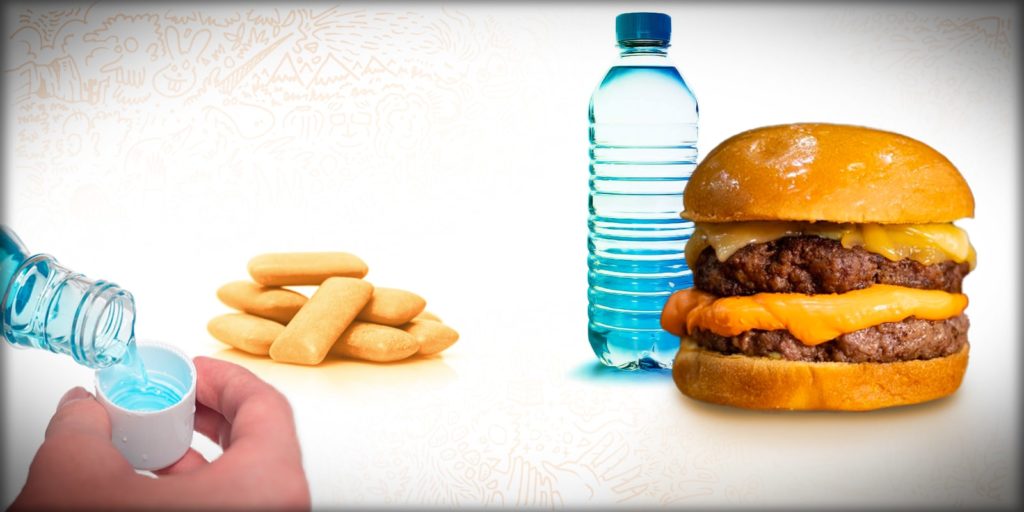
These are the best options for passing a mouth swab drug test (the famous ‘lollipop’) if the circumstances require it. However, times are changing and, as the narrative and laws around marijuana use evolve, it seems likely that cannabis-specific drug testing will become increasingly outdated.
Inevitably, there are numerous barriers to overcome before these tests are abandoned altogether. Hopefully, the day will come when we won’t have to hide the great plant that is cannabis from anyone.