What Makes a Cannabis Variety Worth Releasing?
Originally published: 20 July 2017
Last updated: 21 October 2026
When Seedstockers started in 2017, one of our main jobs was selection.
We had access to experienced seed producers and breeders in Spain, the Netherlands and elsewhere, and there was no shortage of genetics available to us. The difficult part was deciding which of them deserved a place in the Seedstockers catalogue.
Back then, Seedstockers was not yet the breeding company it is today. We relied much more heavily on genetics developed elsewhere, and our role was largely to find varieties we believed growers could rely on, produce them efficiently and make them available at accessible prices.
Almost ten years later, the question is still surprisingly similar.
We still have to decide which genetics are worth releasing.
The difference is that today, most of the newer varieties we are evaluating come from our own breeding programmes.
That has changed what selection means to us.
There are more good plants than good varieties
Anyone who has grown enough cannabis will eventually find an exceptional individual plant.
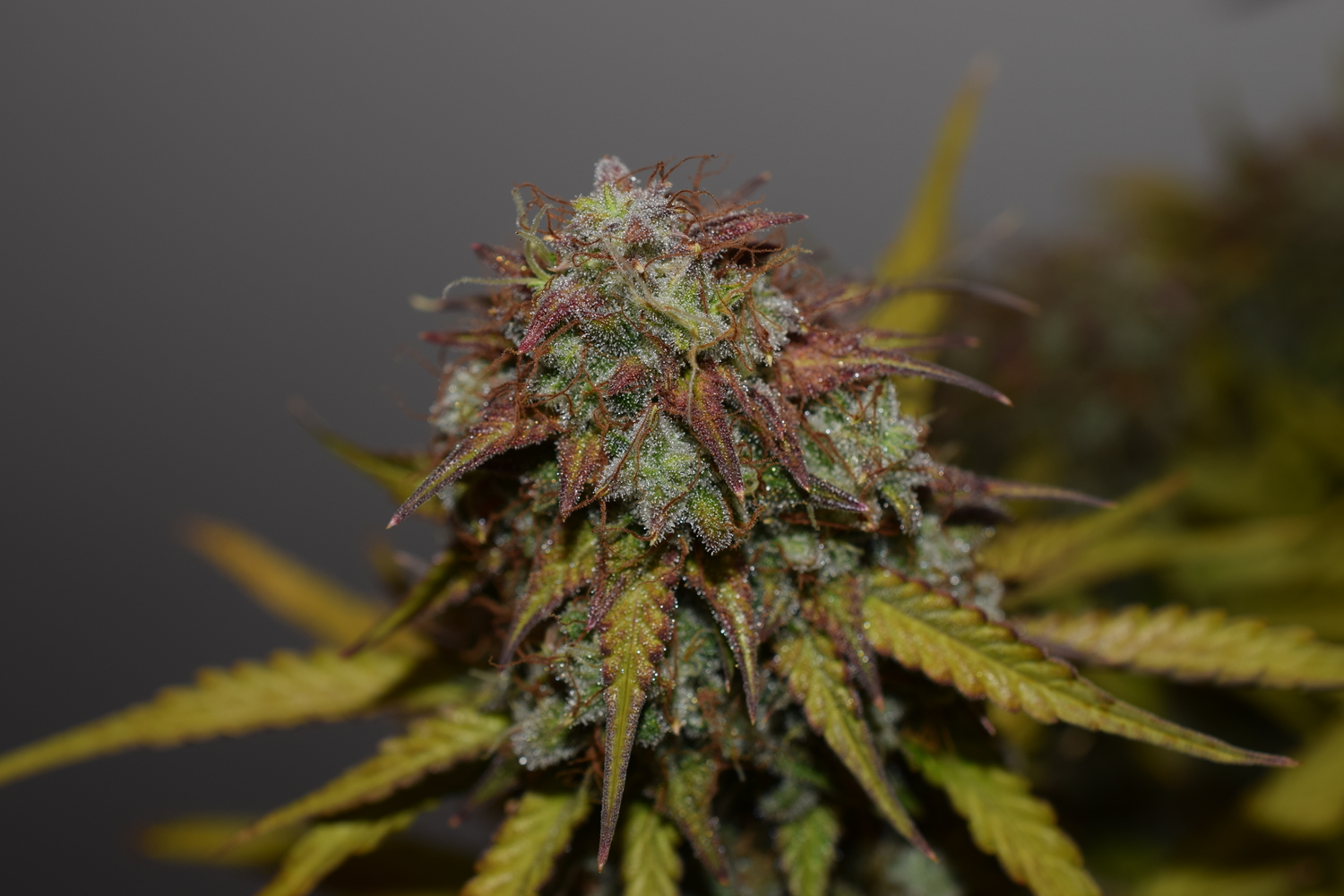
It might have an extraordinary aroma, unusually heavy resin production, beautiful colour or a structure that makes you stop and look twice. Finding a plant like that is exciting, but it does not automatically mean you have created a good variety.
For us, a commercial variety has to do more than produce one spectacular plant.
The traits that made that plant interesting need to appear again with enough consistency to make the genetics useful to other growers. The plants need to behave in a way we understand. They need to perform outside one perfect environment. And ideally, the variety should offer something that earns its place next to everything already available.
This is one of the less visible parts of breeding.
Finding interesting plants is relatively easy.
Deciding which ones are worth pursuing for several more generations is much harder.
What we select for depends on the variety
There is no single checklist that defines good cannabis.
A compact autoflower intended for a balcony grow should not be judged in exactly the same way as a large photoperiod variety selected for indoor production. A variety bred around a distinctive terpene profile may justify itself for very different reasons than one selected for speed, resin production or outdoor resilience.
That means every breeding project starts with an idea of what we are trying to achieve.
Sometimes aroma is the main reason a line interests us. In another project it may be plant structure, potency, yield, flowering speed or resistance. Often it is a particular combination of characteristics rather than one extreme trait.
The important thing is that the finished variety has an identity.
There are already thousands of cannabis varieties on the market. Releasing another cross simply because it is possible does not interest us very much.
We would rather ask whether it adds something.
Consistency matters more than one spectacular result
Cannabis is a naturally variable plant, and some variation within seed-grown genetics is both normal and desirable.
But there is a difference between useful variation and unpredictability.
If a variety is being sold because of a particular aroma, structure or flowering characteristic, growers should have a reasonable chance of finding those traits when they grow it.
This is why repeated selection matters.
A plant can look perfect in one generation and then produce disappointing offspring. Another line may appear less spectacular at first but prove much more reliable when grown repeatedly.
Breeding has a way of punishing impatience.
The more generations you work with a line, the more you learn about what is really in it.
That information is often more valuable than the first impressive photograph.
We select for growers, not just for photographs
The cannabis market has become extremely visual.
That has brought many positive things with it. Growers can now see extraordinary plants from breeders all over the world within seconds.
It has also created an obvious temptation to select primarily for what performs well in a photograph.
A plant covered in frost or displaying unusual colours can be fantastic cannabis, but appearance alone tells you very little about how useful the genetics are to grow.
We want to know what happens before the photograph.
How did the plant grow? Was it vigorous? Did the structure make sense? Did it respond well to normal variations in the environment? Was flowering predictable? Did the finished flowers retain the characteristics that made the selection interesting in the first place?
Those questions matter because most Seedstockers customers are not buying seeds to photograph them.
They are buying seeds to grow them.
The Classics collection reflects where we came from
Some of the genetics in our Classics collection have their roots in the way Seedstockers worked during its first years.
At that time, we relied heavily on existing genetics and on the work of external breeders and producers. Our task was to identify proven material that we believed would perform well and offer it at a competitive price.
That is why the Classics catalogue contains familiar names and genetic families alongside varieties that have been selected and worked within our own production network.
We do not see a reason to rewrite that history.
Cannabis breeding has always built on previous generations of work. Genetics travel, breeders make selections, lines are crossed and ideas evolve.
What matters is being clear about where a variety comes from and what has been done with it.
Superior changed the role of selection
The launch of Seedstockers Superior in 2022 marked a significant shift.
Every Superior variety comes from our own breeding work.
That means we are no longer simply selecting which finished genetics we want to offer. We are making selection decisions much earlier, while the genetics themselves are still being created.
A project may begin with parent selection and continue through several generations before we know whether it will ever become a commercial release.
Many do not.
That is an important part of breeding. Not every interesting project deserves to become a product.
There is always a temptation to release more varieties because new releases create attention. We would rather stop a project if the result does not justify continuing it.
The catalogue does not need another name.
It needs genetics worth growing.
Awards are useful, but they are not the selection process
Seedstockers genetics have now collected more than 70 awards and competition placements around the world.
Those results are valuable because they give us independent feedback. When different growers take the same genetics into competitions in different countries and achieve good results, it tells us something.
But an award is confirmation after the fact.
We do not breed a plant simply to fit the judging criteria of a cannabis cup.
A competition entry represents one grow, one selection and one moment. A seed variety has to work for many more people than the grower who produced the winning flower.
That is why cup results are useful evidence, but they cannot replace selection work.
The real test of genetics is what happens when they leave our hands.
Autoflowers deserve their own selection standards
Autoflowering cannabis has changed dramatically since Seedstockers started.
Years ago, autos were often treated as a compromise: smaller plants, shorter cycles and less complexity, but with obvious advantages for growers who needed speed or plants that flower independently of day length.
Modern autoflowers can be much more sophisticated, but breeding them well requires understanding what makes an autoflower useful in its own right.
Speed matters, but the fastest plant is not necessarily the best one.
We also look at structure, vigour, flower quality, resin production, aroma and whether the plant makes good use of its relatively short life cycle.
An autoflower should not need to imitate a photoperiod variety to justify itself.
It should be a good autoflower.
That distinction has become increasingly important as our own autoflower breeding has developed.
New does not automatically mean better
Cannabis breeding moves quickly and there is constant pressure to release something new.
We understand the attraction. We enjoy new genetics too.
But novelty is not the same thing as progress.
An older, proven variety can still be better suited to a particular grower than the newest cross in the catalogue. Likewise, an unusual parent combination is not automatically interesting simply because nobody has released it before.
This is one reason Seedstockers still has Classics alongside Superior.
We do not believe a catalogue should behave like a fashion collection where last year's genetics suddenly become obsolete.
If a variety performs well, growers enjoy it and it continues to have a reason to exist, age alone is not a reason to remove it.
Breeding should give growers more choice, not make good genetics disposable.
Triploid cannabis adds a completely different selection challenge
Our work with triploid cannabis is a good example of how selection changes when the breeding technology changes.
Most cannabis is diploid, carrying two sets of chromosomes. Triploid cannabis carries three.
Creating those plants is only the first step. We then need to understand how desirable characteristics behave in that genetic context and which selections are actually useful.
Madonna Triploid came out of that work.
For us, the interesting part of a project like this is not simply being able to say that a plant is triploid. A technical characteristic only matters if it leads to genetics that are worth growing.
That principle applies far beyond triploids.
Technology can create possibilities.
Selection decides whether those possibilities are useful.
What makes a variety “Seedstockers”?
This question has become more relevant as our own breeding work has grown.
We do not want every Seedstockers variety to taste the same, grow the same or fit one particular type of cannabis.
The catalogue should have diversity.
What should connect the varieties is the thinking behind them.
They should have a clear reason for being there. They should perform in a way that makes sense for the growers they are intended for. And whether a variety is an affordable Classic or one of our newer Superior genetics, we want the person opening the packet to feel that the genetics justify their place in our catalogue.
That is more important to us than chasing one definition of “the best”.
In fact, after nearly ten years of working with cannabis seeds, we are probably less interested in that phrase than we were when this article was first written.
There is no single best cannabis seed.
There are genetics that are exceptionally good for particular growers, environments, tastes and purposes.
Our job is to find, breed and select more of those.
About this article
This article was originally published on 20 July 2017 under the title “Seed Stockers Best Seeds from the Best Cannabis Breeders at Budget Prices.”
At that time, Seedstockers worked closely with Dutch Passion and relied much more heavily on genetics sourced from external breeders and producers. The original article therefore focused on Seedstockers' access to established breeders, its selection of existing genetics and its low-price business model.
Seedstockers became independent in 2022 and has since developed extensive breeding programmes of its own. Most newer Seedstockers varieties now originate from the company's own work, while all varieties in the Superior collection are Seedstockers breeding.
This article was comprehensively rewritten on 21 October 2026 to reflect that change while preserving the history of the original page.